anik ghosh

Hi, I'm Anik 👋

A product manager who is a designer by training. I research, prototype and ship code myself, so ideas reach users quickly.

I'm a PM at Pazcare, a group health insurance and benefits platform in Bangalore. I own the tools our operations team runs on every day, the dashboard HR teams use, and the analytics across both.

Before that I spent five years at Wongdoody designing enterprise tools and apps for Mercedes-Benz, Coca-Cola HBC and a bank in Jordan. Outside work I run a film club called Cinema Next Door.

Mercedes-Benz Coca-Cola HBC Diageo Bupa Infosys Sunrise

Product Manager · Oct 2025 – now

Fewer spreadsheets for ops. Clearer numbers for HR.

Pazcare is a group health insurance and benefits platform used by 1,400+ companies. I own internal ops tooling, the HR dashboard and analytics.

  1. 01HR claims analytics
  2. 02Endorsement automation
  3. 03Client onboarding
  4. 04Design system
01HR claims analyticsMay – Oct 2026PM, design

HRs check claim status themselves instead of asking their relationship manager

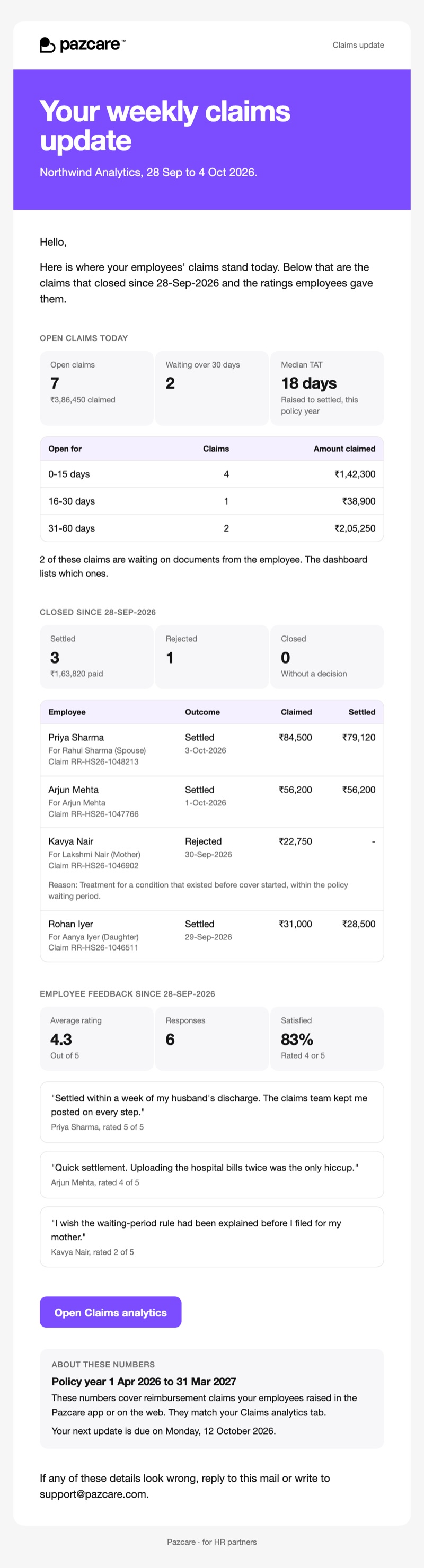
HR teams used to email or call their relationship manager every time they wanted a claims update. Now every client HR (1,400+ companies) has a live claims page on the dashboard, plus a weekly digest in their inbox.
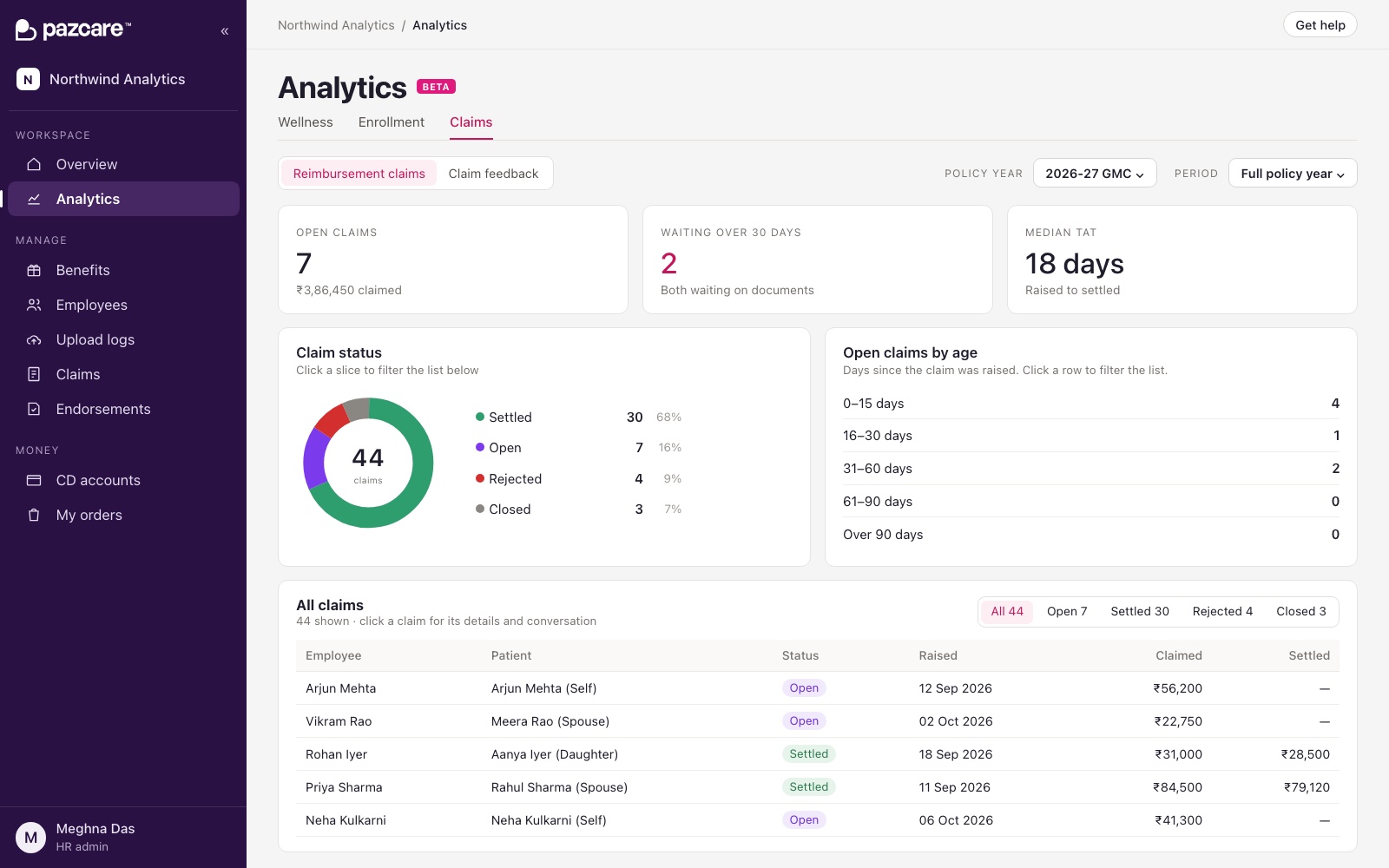
HR claims analytics page
Weekly claims digest email

The HR claims analytics page and the weekly digest email. Sample data.

  • A live view instead of a follow-up. Open, settled and rejected claims update from our own data, so HR can see where any claim stands at any time without waiting on a reply from their relationship manager.
  • From a number to the claims behind it. Every number on the page filters the list below it, so "47 waiting" takes HR straight to those 47 claims and what each one is waiting on.
  • The same picture in their inbox. HRs who don't log in get a weekly or monthly digest of what's open, what closed and what employees said about the experience.
AnalyticsDashboard designLifecycle email
02Endorsement automationApr – Oct 2026PM, design

Endorsements went from fully manual to 25% automated, so ops can take on more accounts

Every change to a company's cover, like a new joiner, an exit or a new dependant, has to be sent to the insurer. That used to be manual work for every batch. I built automated submission through insurer APIs, AI email agents and RPA bots, and now a quarter of lives go out without anyone sending them by hand.

AI email agents went live in Q3 2026 and RPA bots in Q4. By October, a quarter of lives went to insurers without anyone sending them by hand.

  • More volume, same team. Every batch that sends itself is one less in an ops queue. The team spends its time on the exceptions that need judgement, and taking on more accounts doesn't mean hiring more people.
  • Faster turnaround. Automated batches go to the insurer as soon as they're ready instead of waiting for someone to pick them up, so changes to cover reach the insurer sooner.
  • A channel for every insurer. Insurers with an API get batches directly. Insurers that work over email get them from an AI agent that sends the batch and reads the reply. Portal-only insurers get them from an RPA bot.
0% → 25%of lives sent to insurers automatically
22,000+lives processed automatically
Workflow automationAI agentsRPAHR experience
03Client onboardingJul – Oct 2026PM, design, frontend

Moving client onboarding off Excel and into the product

Onboarding new clients ran on Excel sheets that people updated by hand. Now it runs on an in-product board whose stages come straight from our own data, and 300+ companies have been onboarded through it.

Illustration of the old Excel onboarding tracker Client onboarding board in the product Before: ExcelAfter: in the product

Drag to compare. Left: an illustration of the Excel tracker onboarding used to run on. Right: the board in the product, where every stage comes from our own data. Company names are made up.

The problem

When a client signs, operations collects policy documents, maps health cards, sets up the deposit ledger and hands the account over. All of that was tracked in Excel sheets. Status and reality drifted apart, and nobody could say how long onboarding took.

What I did

  • One source of truth. The Excel tracker is gone. Every client being onboarded, its stage and what's still missing now live in one board in the product, used by the onboarding and placement teams.
  • Status comes from the data. Each card's stage is worked out from records already in Pazcare, like documents filed and health cards mapped, so nobody updates status by hand and the board can't drift from reality. Overdue counts show what's slipping.
  • Reconcile lives in one click. Before sign-off, ops had to check the insurer's member list against ours line by line in Excel, and any gap surfaced later as a missing health card or a rejected claim. Now a single button runs the comparison inside the board and lists only the people who need action, so sign-off no longer waits on a manual audit.
300+companies onboarded
20%faster onboarding TAT
0 → 1Workflow toolingOnboardingDesign + build
04Design systemApr – Oct 2026Design, frontend

A design system that humans and AI agents can both build with

After five years of features, the dashboard had a dozen button styles, one-off colours and spacing set page by page. I'm standardising it into one system, with tokens, shared components and documentation, and rolling it out one screen at a time.

Companies page before Companies page after BeforeAfter

Switch pages and drag to compare. Company and people names are made up.

  • Audits mapping where the UI drifts from the system. Two UX audits of the partner dashboard showed where the UI had split apart: ad-hoc colours, raw pixel values and buttons styled page by page.
  • Screens are built from shared, documented components. Type and spacing tokens, one button component with three types, and shared headers, tables and filters, with a lint rule that stops new code from adding raw values. All documented in Storybook.
  • AI-built screens look like the rest of the app. Left to themselves, AI coding agents produce screens that look nothing like each other, and early on their work kept clashing with our existing visual language. Now they build from the same tokens and documented components as everyone else, so what they ship matches the product.
Design systemsStorybookAI-assisted development

Wongdoody · 2021 – 2025

Before Pazcare: five years designing for global brands.

As a Senior Lead in Experience Design, I led research and UX for enterprise tools, employee platforms and consumer apps.

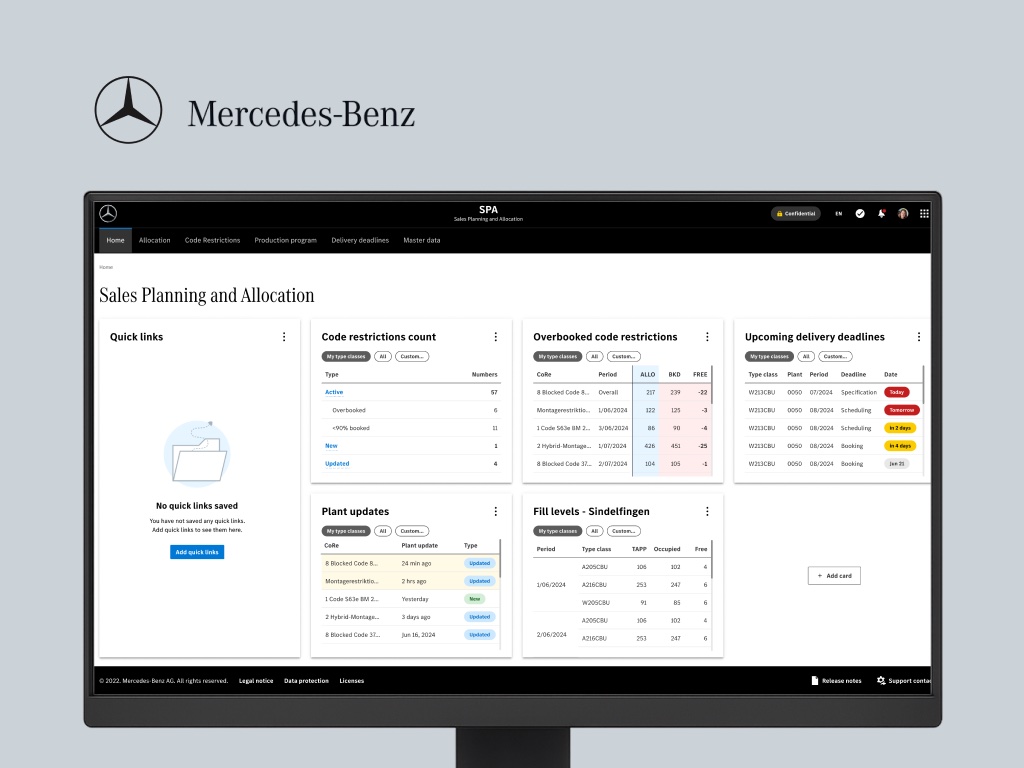
Mercedes-Benz sales planning dashboard
Mercedes-Benz2.5 yearsLead UX/UI designer

Sales planning and allocation for Mercedes-Benz

  • Led UX for four enterprise tools used by executive teams in Germany.
  • Planning systems for global vehicle allocation and production tracking.
  • User interviews and usability testing every sprint.
  • Contributed to a WCAG AA design system used across 40+ internal products.
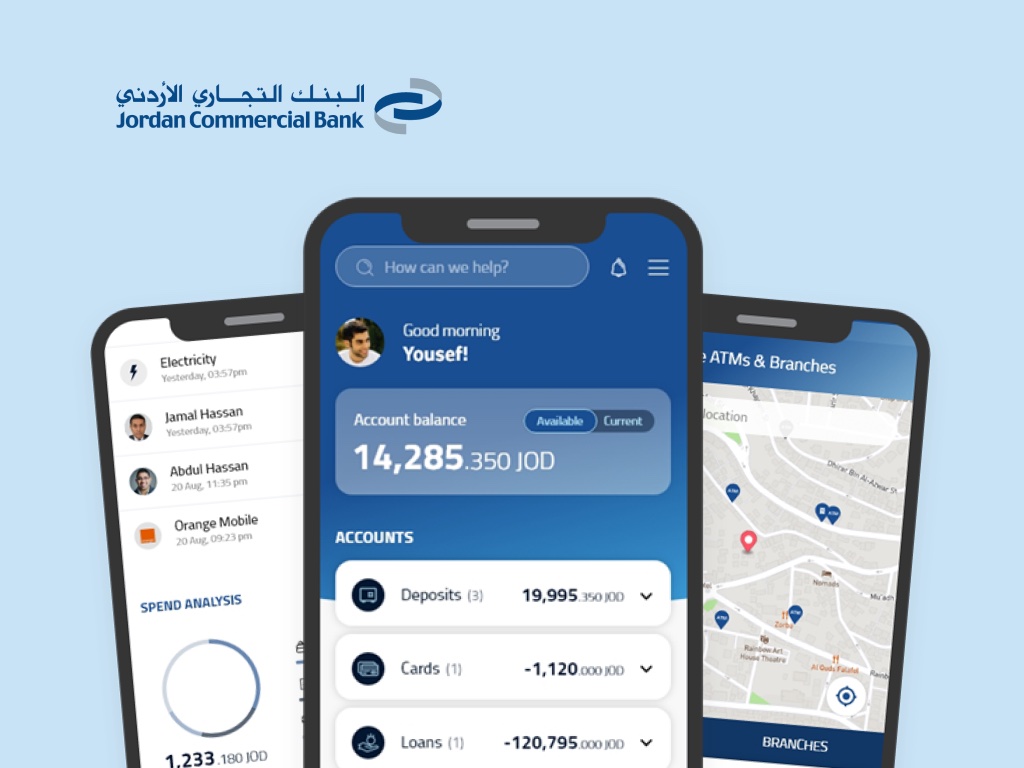
Jordan Commercial Bank mobile app
Jordan Commercial Bank3 monthsLead UX/UI designer

Reimagining mobile banking for under-30s

  • Ran research and branding workshops with the bank's leadership.
  • Built personas and journeys for customers under 30.
  • Designed a new visual language for the app.
  • Shipped the MVP in 8 weeks.
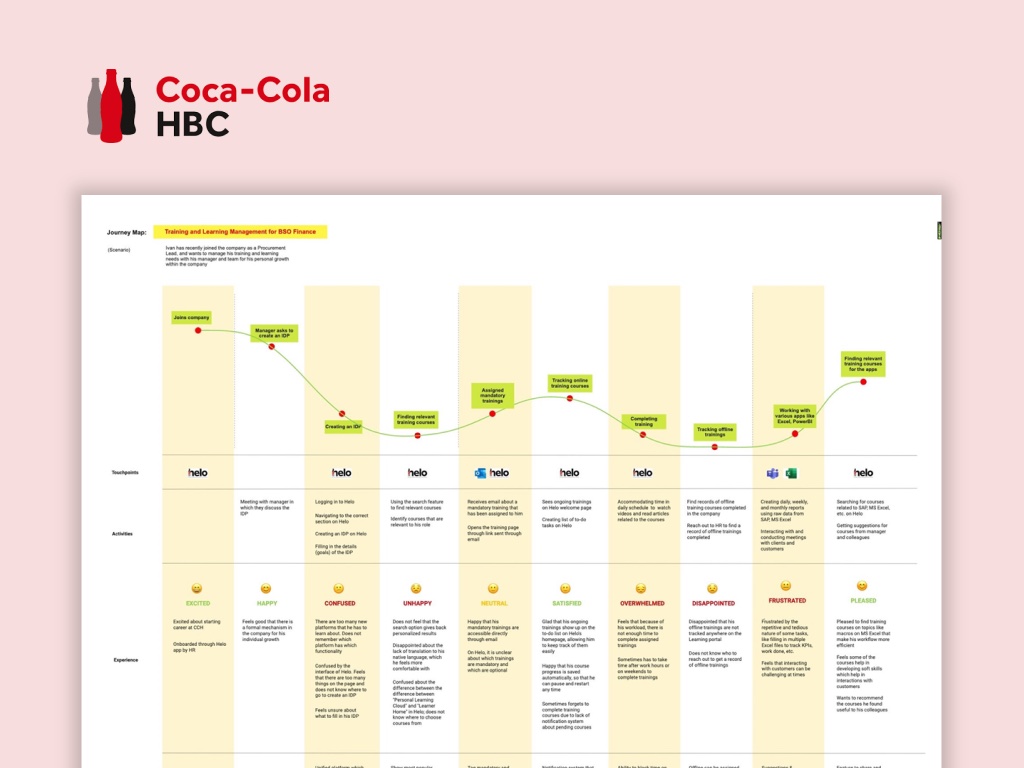
Coca-Cola HBC employee journey map
Coca-Cola HBC3 monthsProduct, UX and visual

Employee experience strategy across 18 countries

  • Ran 60+ user interviews across 18 countries.
  • Combined them with portal analytics and surveys.
  • Turned the findings into 50+ actionable insights.
  • Shaped a UX strategy to each regional role.

How I work

  1. Prototype in code, not in documents.I build early versions as working prototypes and put them in front of the people who'll use them.
  2. Build systems AI can follow.I give AI agents documented components and rules to build with, so their screens look like the rest of the app.
  3. Let people answer their own questions.I look for the questions people keep asking by email and turn the answers into screens.

Writing

More at blog.anikthink.com.